
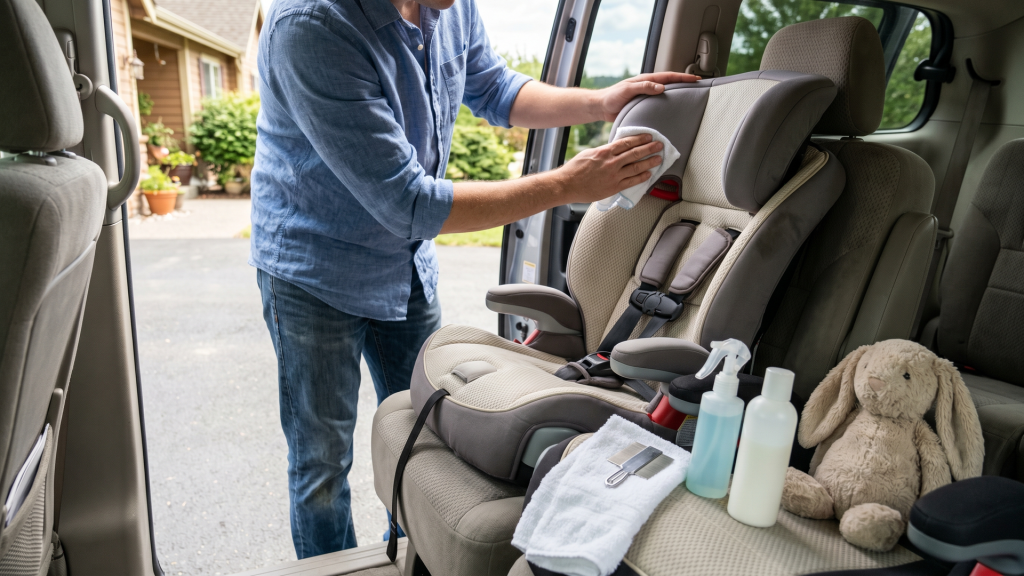
No, head lice can’t live in your car or your child’s car seat. A louse lives on a human scalp and feeds on blood, so one that drops onto a headrest or booster cushion is cut off from its food, and the CDC says lice “will die within two days if they fall off a person and cannot feed.” That leaves a short list of things to wash and a more useful job: checking the heads that ride in the car.
If you just confirmed lice and are now eyeing the back seat, here’s the calm version. A few soft items that touched your child’s head in the two days before treatment are worth washing or bagging, the seats can get a quick vacuum, and nothing in the car needs a spray. The time you save is better spent checking everyone in the household, because lice survive and multiply on heads, not on headrests.
Why a Car Is a Dead End for Head Lice
A louse on a car seat has left the only place it can survive. MedlinePlus describes head lice as tiny insects that live on the skin covering the top of the head, and it says they need to feed on human blood to survive. The AAP puts the limit plainly: head lice “can’t survive more than 1 day without a blood meal.” The CDC’s outer limit is two days. Either way, the countdown is a day or two, not weeks.
Lice stay close to the scalp because that is where they eat. The AAP says head lice feed on small amounts of blood from the scalp, and our post on why lice live at the scalp, not in braids or a weave looks at what that means for different hairstyles. A seat back offers no blood and no scalp. The CDC adds that head lice move by crawling and cannot hop or fly, so a louse that lands on upholstery can’t spring back onto a passenger.
Eggs fare no better. The AAP says lice attach their eggs to hair close to the scalp, and that eggs do not survive once they sit farther than about 4 to 6 mm from it. The CDC says nits “cannot hatch” when they are not kept at the same temperature as those near the scalp. A nit clinging to a stray hair on a headrest has been separated from the warmth it needs. The car can hold a stray louse for a short while, but it can’t keep one alive or let its eggs hatch.
Which Car Items Are Worth Washing?
Wash the soft things that touched your child’s head or hair in the two days before treatment, and vacuum the seats they sat in. The CDC’s laundry advice is to machine wash and dry items a person with lice wore or used during those two days, using the hot water (130 degrees Fahrenheit) cycle and the high heat drying cycle. In a car, that list is short and easy to gather.
| Item in the car | What the CDC, AAP or MedlinePlus advises |
|---|---|
| Hats, scarves, coats or hair ribbons left on a seat | Machine wash in hot water (130 degrees Fahrenheit) and dry on high heat if worn in the two days before treatment |
| Towels or a travel pillow your child rested on | Wash and dry the same way; there is no need to throw these items away |
| Stuffed animals or anything you can’t wash hot | Seal in a plastic bag for two weeks, or dry-clean |
| Combs and brushes in the console or a door pocket | Soak in hot water, at least 130 degrees Fahrenheit, for 5 to 10 minutes |
| Seat fabric and floor where your child sat | Vacuum the floor and furniture, particularly where the person with lice sat or lay |
Hair ties, clips and barrettes rolling around a cup holder belong on the same list if they were worn in that two-day window, and any that can’t take a hot wash can go into the bag with the stuffed animals.
Upholstery is the part that worries parents, and the guidance on it is reassuring. The CDC’s guidance on treating head lice says the risk of getting lice from a louse that has fallen onto a rug, carpet or furniture “is very small,” and a car seat is a close cousin of furniture. The CDC also says spending much time and money on housecleaning is not necessary to avoid reinfestation, so a careful vacuum covers the seats.
Car Seats and Covers You Can’t Wash Hot
If a car seat or booster cover can’t take hot water and high heat, sealing it in a plastic bag for two weeks is the CDC’s alternative for items you can’t wash or dry clean. Before a removable cover goes in the machine at any setting, read its care label and the seat maker’s instructions. They decide how the fabric and straps can be cleaned, and a seat your child depends on for protection is worth that extra minute.
Two time spans run through this guidance, and they do different jobs. Two days is the look-back window: the CDC and AAP point to items used in the two days before lice were found and treated. Two weeks is how long an item that can’t be washed stays sealed. Keeping the two apart stops a quick job from growing into a weekend project.
A cover that stays attached to the shell can’t go in a bag, and it doesn’t need to. Vacuum the spot where your child’s head and shoulders rested, in line with the CDC’s advice for furniture, and let the short survival window take care of anything the vacuum misses. Keep plastic bags for stored items only; the AAP warns never to place a plastic bag on a child’s head.
Should You Spray or Fog the Car?
No. The CDC says not to use fumigant sprays or fogs, because “they are not necessary to control head lice and can be toxic if inhaled or absorbed through the skin.” A car is a small, closed space where your family sits close together on every drive, which makes that warning worth taking seriously.
The AAP gives the same advice for the house: “Do not spray pesticides in your home.” Those products, it explains, can expose your family to dangerous chemicals and are not needed when you treat your child’s scalp and hair properly. Nothing about a car interior changes that reasoning. The lice that matter are on a head, and a head is where treatment belongs.
A messy car isn’t the cause, either. The CDC states that getting head lice “is not related to cleanliness of you or your environment,” so crumbs in the cup holders and sand on the floor mats have nothing to do with how lice arrived or whether they come back.
Where Lice Really Spread on a Drive
The real risk in a car is two heads touching, not the seat. The AAP says the main way head lice spread is “close, prolonged head-to-head contact,” and a long ride offers chances for it: children leaning together over one screen, sharing a blanket pulled up to their ears, or dozing on a sibling’s shoulder. Seating kids so their heads stay apart on longer drives fits the CDC’s advice to avoid hair-to-hair contact during play and other activities.
Shared things that touch the head come next. MedlinePlus advises teaching children not to share clothing and other items they put on their head, “such as headphones, hair ties, and helmets,” while the AAP calls the chance of spread through combs, brushes, hats and sports helmets “very small.” If one set of headphones gets passed around the back seat, our post on lice and shared headphones goes into that question.
Other children who ride with yours may be worth a heads-up. If your child has shared a back seat with friends in a carpool, a short, factual message lets those families run their own checks at home, and nobody needs to feel blamed. Children without itching can still have lice: the CDC says people with head lice may not have symptoms, particularly with a first infestation or when an infestation is light, and that itching may take four to six weeks to appear the first time. Head lice are a nuisance, not a danger; the CDC says they do not transmit any disease and are not considered a health hazard.
Checking Your Passengers Matters More Than Cleaning the Car
Checking every person who rides in the car does more to stop lice than any upholstery cleaning can. The CDC advises checking all household members and other close contacts, and treating everyone who has lice, and the people they share a bed with, at the same time. It also lists reinfestation after successful treatment among the reasons treatment can fail, and since lice mainly spread through direct contact with an infested person’s hair, the heads in your car are the place to look.
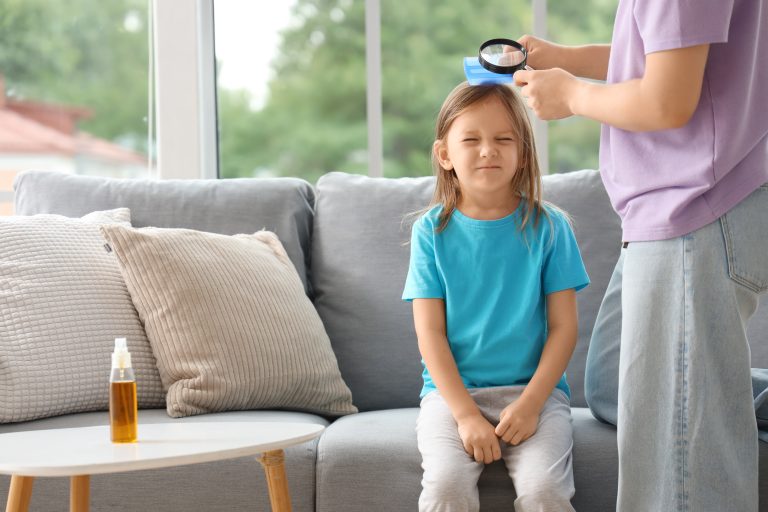
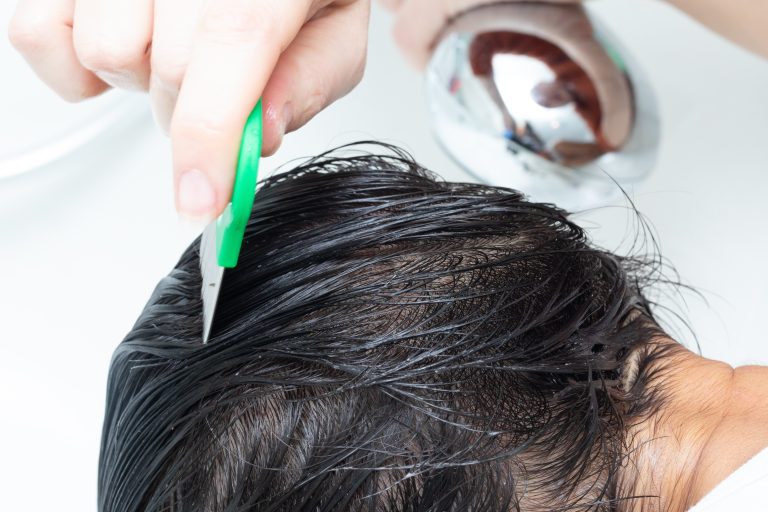
The AAP describes a comb-out check. Seat your child in a brightly lit room, wet their hair, and comb through small sections with a fine-tooth louse or nit comb, wiping the comb on a wet paper towel after each pass and examining the scalp, comb and towel. The easiest places to look, per the AAP, are the hairline at the back of the neck and behind the ears. The CDC says to look for nits attached firmly within a quarter inch of the base of the hair shaft, and that lice can also turn up on eyebrows and eyelashes, which our post on lice in eyebrows or eyelashes explains.
Telling nits from dandruff is one place checks go wrong. “Misdiagnosis of head lice infestation is common,” the CDC notes, and nits get mistaken for dandruff, hair spray droplets and dirt. The AAP’s test is simple: nits are firmly attached to the hair, while dandruff and dirt are not. According to the CDC, finding a live louse on the scalp or hair is the best way to diagnose head lice, and if you are not sure, it suggests seeing your healthcare provider.
If a check does turn up live lice, the AAP recommends checking with your child’s doctor before beginning any head lice treatment, and the CDC asks that any lice medicine be used as directed on the box or label.
Frequently Asked Questions
Can lice live on a car seat headrest overnight?
A louse can still be alive on a headrest the next morning, but not for much longer. Without a blood meal, the AAP gives head lice no more than a day, and the CDC sets the outer edge at two days. If your child will lean on that headrest again before then, a quick vacuum of the spot is a sensible precaution, along with washing anything soft that was tucked behind their head.
Will a hot car kill head lice?
Don’t count on it. The figure of 130 degrees Fahrenheit in CDC guidance is for laundry water and for soaking combs and brushes, not for a parked car on a warm afternoon. Time and the washing machine are the dependable tools: lice off a head don’t last beyond a couple of days, and items worn in the two days before treatment can go through a hot cycle and a high heat dry.
Can my child pick up lice from the car again after treatment?
The chance is very small. That is how the CDC describes catching lice from a louse that has fallen onto furniture, and a louse that has dropped off a head can’t feed and won’t last. Another person who still has lice is the closer source of trouble, which is why checking the whole household matters more than another round of vacuuming.
Can lice live in a car’s vents or air conditioning?
No. Head lice are crawling insects, and the AAP says they cannot jump, hop or fly, so they don’t drift through a vent on moving air. They also have to stay near a scalp to feed. There’s no reason to treat the vents or swap a cabin filter because of lice, and the CDC’s warning against sprays and fogs applies here as well.
Can the family dog bring lice into the car?
No. The CDC states that animals do not get or spread head lice, so a dog riding in the cargo area is not a source and does not need any treatment for them. And keep pet products for pets: the AAP warns parents never to use medicines made for use on animals on their children.
What if my child napped against the headrest on the way home?
Handle that headrest the way you would a couch cushion after a nap: vacuum where their head rested and wash any travel pillow, hoodie or blanket from the ride in hot water with a high heat dry. The CDC includes lying on a pillow, couch or bed recently used by someone with lice among the ways head lice may spread, while noting that these routes are “not as common.”
Do I need to clean a car my child rode in a week ago?
No extra cleaning is called for. Washing guidance from the CDC and AAP covers things used in the couple of days before lice were found, and a louse that fell off during a ride a week ago could not have survived that long without feeding. Put the energy into comb-out checks and whatever plan your child’s doctor recommends.
How Lice Lifters of Greater Washington Can Help
If the car is handled and you’re still unsure what’s happening on your child’s head, our clinic can take that question off your list. At Lice Lifters of Greater Washington, we check the whole family, so you know who needs care and who doesn’t. When lice are found, our professional lice treatment is non-toxic and done in one visit, and same-day appointments are available when you’d rather not wait. Our 30 Day Guarantee applies when the whole family is checked. There’s no need to strip the car or fog the house before you come in; bring your family, and we’ll take it from there. When you’re ready, book a head check for your family.