
Families in Silver Spring and Montgomery County have four options for head lice: a drugstore medicine, a prescription medicine from your child’s doctor, combing at home, and a professional visit at a clinic. There is no single best choice for every child. The CDC says both over-the-counter and prescription medicines can effectively treat head lice, so what matters is the child’s age, using the medicine exactly as labeled, and treating again on the right day if it does not kill eggs.
This page covers what each option does to live lice and to eggs, when to treat again, the ages the CDC lists, and what to do when a treatment did not work. Medicine decisions start with your child’s doctor: the American Academy of Pediatrics tells parents to check with the child’s doctor before starting any head lice medicine, and the CDC says to consult your healthcare provider before treating young children. The medicine facts here come from the CDC’s clinical care page for head lice.
We are a single clinic on Fenton Street in downtown Silver Spring, so this page compares the four options the way a Montgomery County parent actually meets them. The professional visit is the one we offer, and it comes after the national medicine facts rather than ahead of them.
Four Lice Treatment Options for Silver Spring and Montgomery County Families
A family who finds lice tonight is choosing among four things. Here is what each one is, before the details.
- A drugstore medicine. Two active ingredients are approved by the FDA for over-the-counter head lice products: pyrethrins with piperonyl butoxide, and permethrin lotion, 1%. By the CDC’s descriptions, neither kills unhatched eggs, so each comes with a retreatment day.
- A prescription medicine from your child’s doctor. The CDC lists benzyl alcohol lotion, ivermectin lotion, malathion lotion and spinosad topical suspension as approved by the FDA for head lice treatment. The AAP says prescription treatment is not only a last resort.
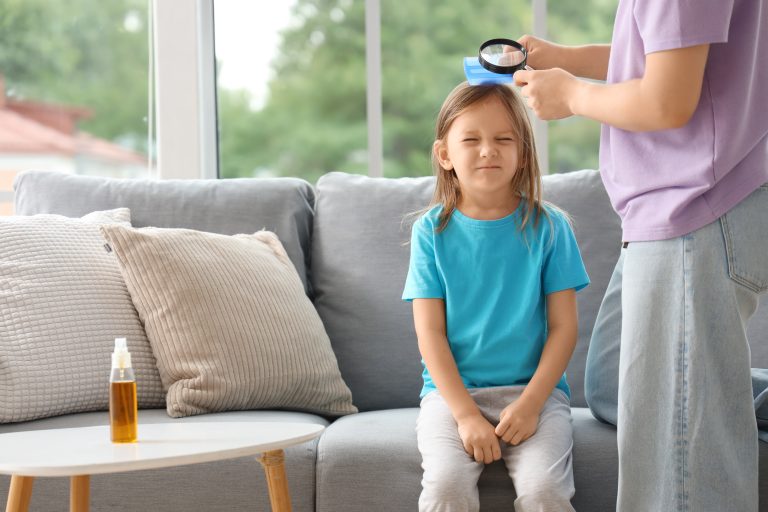
- Combing at home. The AAP says the comb-out method usually doesn’t work on its own to get rid of head lice. Its job is after treatment, when the AAP says it may help remove nits and eggs.
- A professional visit at our Silver Spring clinic. An in-clinic service is not one of the CDC’s two medication categories. It is a different kind of option, and it is the one we provide.
That order is not a ranking. The sections below give the CDC and AAP facts for each one, and then the practical local picture.
What Does “Most Effective” Mean for Your Child?
“Most effective” is not a single product. For one specific child, it means a treatment that passes four plain tests.
- It kills live lice. The CDC says both over-the-counter and prescription medications are available to effectively treat head lice, so this test is about using an approved medicine rather than an improvised one.
- You know what it does to eggs. The CDC divides medicines into those that kill lice and eggs, where retreatment is usually not required, and those that kill lice but are not effective at killing eggs, where a second treatment is recommended.
- It fits the child’s age. Every medicine on the CDC’s list carries a minimum age, and those ages are not the same from one product to the next.
- It is used exactly as labeled. The AAP tells parents to follow the directions on the package exactly as written, and the CDC says to use the lice medicine as directed on the box or label.
There is a fifth factor, and it is local rather than national. The AAP’s “Head Lice Treatment Myths & Realities” page says head lice can be resistant to the active ingredients in over-the-counter treatments in some communities, and that the likelihood of resistance varies across the country. The same page says your pediatrician can help you choose an appropriate treatment option for your child, which is a good reason to ask before you buy rather than after.
One honest limit on that, for our own area: neither the CDC page nor the AAP page gives a resistance figure for Montgomery County, and we have none to offer. What the AAP says is that resistance varies by community, so your child’s pediatrician is the person to ask about what is working here.
Drugstore Lice Medicines: Pyrethrins and Permethrin
Drugstore (over-the-counter) lice medicines come down to two active ingredients: the CDC says each over-the-counter product approved by the FDA for the treatment of head lice contains either pyrethrins combined with piperonyl butoxide, or permethrin lotion, 1%. Both are approved medicines that can work when they are used correctly. The detail that decides the outcome is what they do not do, because neither one kills unhatched eggs.
Pyrethrins can only kill live lice, not unhatched eggs, so the CDC says to treat a second time 9 to 10 days after the first treatment to kill any newly hatched lice before they can produce new eggs. Pyrethrin is approved for use on children two years of age and older. On resistance, the CDC is careful about scope: the efficacy of pyrethrins may be reduced because of development of resistance, but the prevalence of resistance has not been well studied and is unknown.
Permethrin kills live lice but not unhatched eggs, and the CDC says you may need to treat again on day nine to kill any newly hatched lice before they can produce new eggs. It is approved for use on children two months of age and older, the youngest age on the CDC’s list. The CDC also says lice have developed some resistance to 1% permethrin, but that the prevalence of resistance is unknown.
The CDC’s page names brand examples, including Rid, Nix, Ulesfia, Sklice, Ovide and Natroba, and states that use of trade names is for identification purposes only and does not imply endorsement by CDC, the Public Health Service, or by the U.S. Department of Health and Human Services. We use active ingredients everywhere else on this page, because that is what determines the age limit and the retreatment day.
The CDC gives two application warnings, and the first of them appears in its list of reasons treatment can fail. Do not use a combination shampoo/conditioner, or conditioner, before using lice medicine, and do not re-wash the hair for 1 to 2 days after removing the lice medicine. If you want the background on these products, see how lice shampoo works.
Prescription Lice Medicines From Your Child’s Doctor: Benzyl Alcohol, Ivermectin, Malathion and Spinosad
This route starts with a call to your child’s doctor, who decides whether a prescription medicine is appropriate and which one. The CDC lists these prescription medications, in alphabetical order, as approved by the FDA for head lice treatment. The AAP’s “Head Lice Treatment Myths & Realities” page adds a point worth knowing before you call: prescription treatment is not only a last resort. Several prescription treatments suggest using only 1 application, some prescription products do not call for nit combing, and because they have different active ingredients than the over-the-counter products, they may need to be used in the initial treatment of head lice in some communities based upon local resistance patterns.
Benzyl alcohol lotion, 5% kills lice but does not kill eggs. The CDC says to treat again after 7 days to kill any newly hatched lice before they can produce new eggs, and that it is intended for use on persons who are six months of age and older. It can irritate skin.
Ivermectin lotion, 0.5% is approved for people six months of age and older. It kills lice and, although it does not kill eggs, appears to prevent nymphs, meaning newly hatched lice, from surviving. The CDC says it is effective in most patients when given as a single application on dry hair without nit combing, and that it should not be used for retreatment without talking to a healthcare provider.
One point to raise with a pharmacist: the CDC’s clinical care page lists ivermectin lotion among the prescription medications, while the AAP parent guide’s chart says “No prescription needed” for it. Rather than guess which applies to the product on the shelf near you, ask your pharmacist or your child’s doctor.
Malathion lotion, 0.5% is pediculicidal, meaning it kills live lice, and partially ovicidal, meaning it kills some lice eggs. A second treatment is recommended if live lice are still present 7 to 9 days after treatment, and it is intended for use on persons six years of age and older. The CDC warns that malathion can irritate skin and is flammable: do not smoke or use electrical heat sources, including hair dryers, curlers, and curling or flat irons, when applying malathion lotion and while the hair is wet.
Spinosad topical suspension, 0.9% is approved for the treatment of children six months of age and older. Since it kills live lice as well as unhatched eggs, the CDC says retreatment is usually not needed and nit combing is not required. Repeat treatment only if live crawling lice are seen seven days after the first treatment.
Lice Treatments Side by Side: Age Limits, Eggs and Retreatment
Here is the same information in one place, drawn from the CDC’s clinical care page for head lice, dated Jan. 31, 2025.
| Medicine | What the CDC says it does | When to treat again | Minimum age the CDC lists |
|---|---|---|---|
| Pyrethrins with piperonyl butoxide (over-the-counter) | Kills live lice, not unhatched eggs | 9 to 10 days after the first treatment | 2 years and older |
| Permethrin lotion, 1% (over-the-counter) | Kills live lice, not unhatched eggs | May need to treat again on day nine | 2 months and older |
| Benzyl alcohol lotion, 5% (prescription) | Kills lice, does not kill eggs | After 7 days | 6 months and older |
| Ivermectin lotion, 0.5% (listed by the CDC with prescription medications) | Kills lice; does not kill eggs but appears to prevent newly hatched lice from surviving | One application; not for retreatment without talking to a healthcare provider | 6 months and older |
| Malathion lotion, 0.5% (prescription) | Kills live lice and some lice eggs | A second treatment if live lice are still present 7 to 9 days later | 6 years and older |
| Spinosad topical suspension, 0.9% (prescription) | Kills live lice and unhatched eggs | Usually not needed; repeat only if live lice are seen seven days later | 6 months and older |
Read it in two passes. Start with the rows your child’s age allows, then look at the eggs column, because a medicine that does not kill eggs needs its retreatment day on the calendar the same hour you use it. Ages and timing here are the CDC’s summary, the product label controls, and your child’s doctor or pharmacist makes the call.
Combing at Home and Home Remedies: What the CDC and AAP Say
Home remedies are the next question, and neither national source supports them. The CDC says it does not have scientific evidence that suffocating head lice with mayonnaise, olive oil, margarine, butter, or similar substances is an effective form of treatment. The AAP says not to use home remedies such as petroleum jelly, mayonnaise, tub margarine, essential oils or olive oil, because no studies prove they work, and never to use dangerous products like gasoline or kerosene or medicines made for use on animals. Its “Head Lice Treatment Myths & Realities” page says mayonnaise, olive oil, margarine and butter have not been proven as effective head lice treatments.
Our post on lice home remedies, mayonnaise and olive oil covers those two specifically.
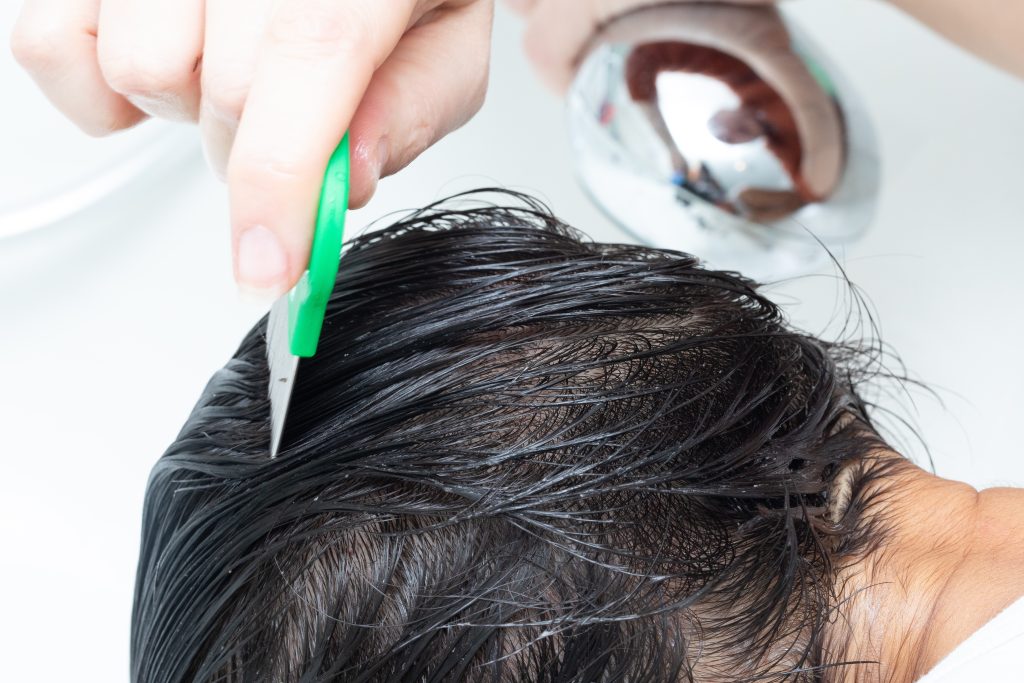
Combing is a different question with a more useful answer. The AAP’s parent guide to head lice says the most effective way to treat head lice is with head lice medicine, and that the comb-out method usually doesn’t work on its own to get rid of head lice. After treatment it has a real job: the AAP says using the comb-out method every 2 to 3 days for 2 to 3 weeks may help remove the nits and eggs, and the CDC says to check hair and remove nits and lice every 2 to 3 days for the next 2 to 3 weeks after each treatment, adding that you do not need to remove nits when treating with spinosad topical suspension.
The CDC’s instruction is to use nit combs to remove nits and lice from the hair shaft. Expect it to take patience, because the AAP notes that nits attach to the hair with a sticky substance that holds them firmly in place. If you are doing this yourself, read our guide to using a lice comb the right way.
A Professional Lice Visit in Silver Spring: What It Is and Is Not
One clarification before we describe it: professional treatment is not one of the CDC’s medication categories. The CDC compares over-the-counter medicines and prescription medicines, and an in-clinic service sits outside that comparison. It is a different kind of option, it does not replace what your child’s doctor tells you about medicines, and it is the service we provide at our clinic on Fenton Street in downtown Silver Spring.
A visit starts with a Lice Lifters head screening, so you know what you are dealing with before anything is applied. The treatment itself is enzyme-based and non-toxic, and it is followed by a thorough comb-out done by a trained technician. It is same-day and one visit, it is safe for children and all ages, and you leave with a plan for the next days at home.
An appointment typically takes about an hour, and that varies with hair thickness and how much lice are present. We stand behind the visit with our 30 Day Guarantee, which applies when the whole family is checked.
The clinic sits in the heart of the Fenton Village district. We are a short walk from the Silver Spring Metro station on the Red Line, and there is metered street parking plus nearby garages on Wayne Ave and Fenton St. We work by appointment only, and we don’t do home visits: everything happens at our Silver Spring clinic. You can see more on our Silver Spring location page.
We are a single in-clinic location serving families across Montgomery County and the wider Washington DC metro, and families reach us from across the county, from Olney to Chevy Chase. For families in Silver Spring, Bethesda, Rockville, Gaithersburg, Takoma Park and the rest of Montgomery County who would rather not run a treatment schedule at home, reliable options are professional Lice Lifters treatment and Lice Lifters products. Our lice treatment services page explains what a visit includes, and you can browse the Lice Lifters products page as well.
Why a Lice Treatment Can Seem Not to Work
A treatment that failed and a treatment that is still working can look the same on the first evening. The CDC lists five reasons treatment for head lice can fail.
- Misdiagnosis
- Recent application of combination shampoo/conditioner or conditioner to hair
- Not following treatment instructions
- Head lice resisting the medication
- Reinfestation after successful treatment
Before you judge the result, use the CDC’s timing rule from its head lice treatment page. If you notice a few lice still moving slowly 8 to 12 hours after treatment, you do not need to reapply the medicine, because it takes time to kill all the lice. If, 8 to 12 hours after treatment, you do not find any dead lice, or the lice seem as active as before treatment, the medicine may not be working: talk to your healthcare provider before re-treating, and they may suggest a different medicine.
Reinfestation after successful treatment is the last of the five reasons the CDC lists. We go through that pattern in our post on why treated lice keep coming back.
The CDC’s instruction on that point is direct: treat all infested persons, meaning household members and close contacts, and people they share a bed with at the same time. If you are deciding between one child and the whole house, our post on whether to treat everyone or just one kid works through it.
What to Do If You Already Treated and Still See Lice
If you have treated and you are still finding live lice, the next step is not another bottle. Work through these in order.
- Stop re-applying. The CDC says not to use extra amounts of any lice medication unless instructed to do so by your physician and pharmacist, because the drugs used to treat lice are insecticides and can be dangerous if misused or overused. It also says not to treat a person more than 2 to 3 times with the same medication if it isn’t successful, and not to use different head lice drugs at the same time unless instructed to do so by your healthcare provider or pharmacist.
- Keep checking and combing. After each treatment, check hair and remove nits and lice every 2 to 3 days for the next 2 to 3 weeks, as the CDC advises. This is how you learn whether the medicine worked instead of guessing from one look.
- Call before you switch. The AAP says to check with your child’s doctor before beginning a second or third medicine, because your child may just need to repeat the same medication, or switch to a new one.
- Ask about an alternative. The CDC says that if crawling lice are still present after a full course of treatment and retreatment, an alternative medication can be considered.
Two posts here go deeper on those judgment calls: how to tell if a lice treatment worked and when lice is too serious to treat at home.
Keep the safety rules in place while you work. The AAP’s guidance for parents is that medicine should be applied by an adult and never by children, that you place your child’s head over a sink and rinse the medicine off with warm water rather than hot water, that you never leave a child alone with medicine in his or her hair, and that you never place a plastic bag on a child’s head. The CDC adds to keep all of these medications out of the eyes and to flush them immediately if they get in.
For the house, the CDC keeps it narrow: machine wash and dry clothes, beddings, and items used by the infested person in the two days before treatment, and do not use fumigant sprays or fogs, because they can be toxic if inhaled or absorbed through the skin. The AAP likewise says not to spray pesticides in your home.
Which Option Fits Your Family? A Decision Guide for Montgomery County
Put the four options against your own situation, one at a time.
- If you are reaching for a drugstore medicine, check your child’s age against the table above first, then write the retreatment day on the calendar before you open the box, because pyrethrins and permethrin do not kill unhatched eggs.
- If you want to ask what is working locally, call your child’s pediatrician. The AAP says the likelihood of resistance varies across the country and that your pediatrician can help you choose an appropriate treatment option for your child.
- If a first medicine did not work, a prescription medicine from your child’s doctor is worth asking about, since the AAP says prescription treatment is not only a last resort, and the doctor decides which one.
- If you are counting on combing alone, know what it can do: the AAP says the comb-out method usually doesn’t work on its own, and its job is after treatment, every 2 to 3 days for 2 to 3 weeks.
- If you would rather not apply a medicine exactly as labeled and then run that two to three week check yourself, or you simply want a trained technician to do the screening and the comb-out, that is what a visit to our Silver Spring clinic is for.
- If you are unsure which of the four fits, your child’s doctor is the right first call. The CDC says to consult your healthcare provider before treating young children.
Families outside Montgomery County, or comparing options across the state, can read our statewide guide to lice treatments in Maryland. Families closer to Calverton, Carderock or Chevy Chase can also use those location pages.
And if you would rather hand the screening and comb-out to someone who does this every day, you can book a visit with us on our appointment booking page. We will check every head you bring in and tell you plainly what we find.
FAQs
What is the most effective lice treatment for a family in Silver Spring?
There is no single answer for every child, here or anywhere else. The AAP says the most effective way to treat head lice is with head lice medicine, and the CDC says both over-the-counter and prescription medications are available to effectively treat head lice. The effective choice for your child is the one that matches their age, is used exactly as labeled, and is repeated on the right day if it does not kill eggs. Ask your child’s doctor first.
What lice treatment options do Montgomery County families have?
Four. A drugstore medicine with one of the two FDA-approved over-the-counter active ingredients, a prescription medicine from your child’s doctor, combing at home, and a professional visit at a clinic like ours in downtown Silver Spring. The first two are the CDC’s medication categories. Combing has its job after treatment, and an in-clinic visit is a different kind of option rather than a medicine.
Do over-the-counter lice treatments still work?
They are FDA-approved medicines, and the CDC does not write them off. What the CDC does say is specific: the efficacy of pyrethrins may be reduced because of development of resistance, but the prevalence of resistance has not been well studied and is unknown, and lice have developed some resistance to 1% permethrin, with the prevalence of that resistance unknown. The AAP adds that the likelihood of resistance varies across the country, so ask your pediatrician.
Which lice medicines kill eggs?
By the CDC’s descriptions, spinosad topical suspension, 0.9%, kills live lice as well as unhatched eggs, and malathion lotion, 0.5%, kills live lice and some lice eggs. Pyrethrins, permethrin and benzyl alcohol lotion kill lice but not eggs. Ivermectin lotion does not kill eggs either, though it appears to prevent newly hatched lice from surviving. Anything that does not kill eggs needs a second treatment on schedule.
When should I treat again?
It depends on the medicine. The CDC lists 9 to 10 days after the first treatment for pyrethrins, day nine for permethrin, after 7 days for benzyl alcohol lotion, and a second malathion treatment if live lice are still present 7 to 9 days later. With spinosad, the CDC says retreatment is usually not needed, and to repeat only if live lice are seen seven days later. Ivermectin lotion should not be repeated without talking to a healthcare provider.
How old does a child need to be for lice medicine?
The CDC lists a minimum age for each one: permethrin lotion, 1%, from two months; pyrethrins from two years; benzyl alcohol lotion, ivermectin lotion and spinosad from six months; and malathion from six years. Those are the CDC’s figures and the product label controls. The CDC also says to consult your healthcare provider before treating young children.
Do home remedies like mayonnaise or olive oil work?
The CDC says it does not have scientific evidence that suffocating head lice with mayonnaise, olive oil, margarine, butter, or similar substances is an effective form of treatment. The AAP says not to use home remedies such as petroleum jelly, mayonnaise, tub margarine, essential oils or olive oil, because no studies prove they work, and never to use gasoline, kerosene or medicines made for use on animals.
Can I use two different lice treatments at the same time?
Not on your own. The CDC says not to use different head lice drugs at the same time unless instructed to do so by your healthcare provider or pharmacist. If the first medicine did not appear to work, the AAP’s advice is to check with your child’s doctor before beginning a second or third medicine, because your child may just need to repeat the same medication, or switch to a new one.
How many times can I repeat the same lice medicine?
The CDC says not to treat a person infested with lice more than 2 to 3 times with the same medication if it isn’t successful, and not to use extra amounts of any lice medication unless instructed to do so by your physician and pharmacist. These drugs are insecticides and can be dangerous if misused or overused. If crawling lice are still present after a full course and retreatment, the CDC says an alternative medication can be considered.
Where is the Lice Lifters clinic in Silver Spring, and how do I book?
Our clinic is at 8115 Fenton St Ste 214, Silver Spring, MD 20910, in downtown Silver Spring, and it is the single location serving families across Montgomery County. We work by appointment only, and we don’t do home visits, so everything happens at the clinic. You can book a visit on our appointment booking page.
How long does a professional lice treatment appointment take?
An appointment with us typically takes about an hour, and the time varies with hair thickness and how much lice are present. It covers a Lice Lifters head screening, the enzyme-based, non-toxic treatment and a thorough comb-out by a trained technician. It is same-day and one visit, and you leave with a plan for the next days at home.
Is professional lice treatment safe for young children?
Our in-clinic treatment is enzyme-based and non-toxic, and it is safe for children and all ages. A trained technician performs the screening and the comb-out, so the careful part is not left to a parent at home at the end of a long day. Questions about medicines still belong with your child’s doctor. More answers are on our FAQs page.